

The choice between triathlon bike vs road bike depends on how you train, race, and what you expect from your cycling experience. Road bikes, and I suppose it’s worth saying up front, are generally built for everyday comfort rather than pure speed. Triathlon bikes, on the other hand, are made to be as fast as possible.
So, this distinction is actually pretty crucial because when you get it right, the bike you buy is going to be the one that does what you need it to, both day to day and when you’re racing.
Read on then, to get a better sense of the key differences and which one is right for you. This article is for anyone who:
- is looking to get into triathlon and doesn’t want to shell out for the wrong bike.
- enjoys cycling but is still trying to work out whether they’ve got what it takes to get one of those tricky tri bikes.
- is already racing on a road bike and wondering if a switch to a triathlon bike is actually worth the outlay.
Road Bike vs Triathlon Bike Explained
The fundamental difference between them lies in their approach to design.
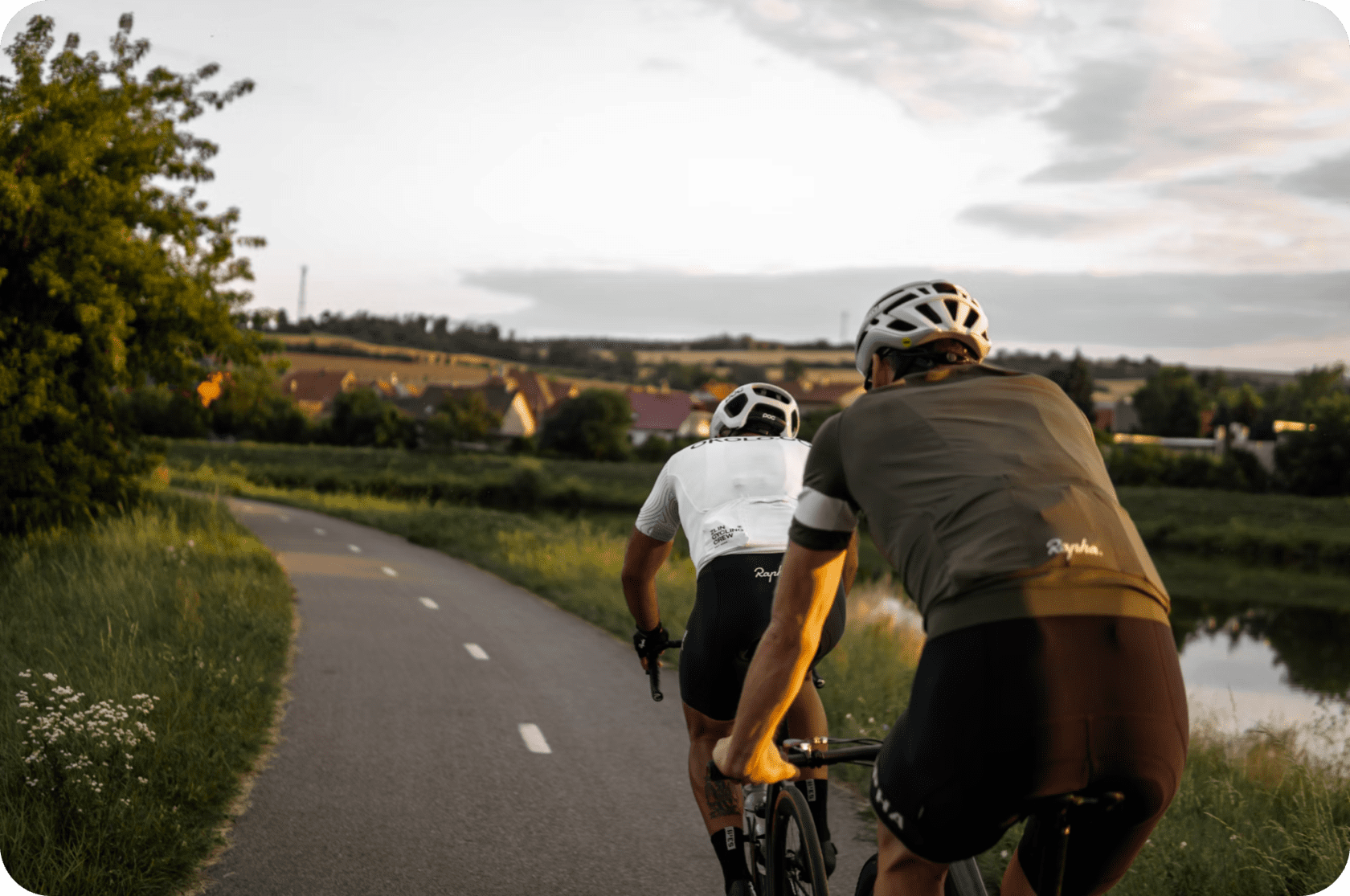
Road bikes are built for that ultimate blend of versatility, all-day comfort, and some seriously snappy handling. They’re the go-to choice for group rides, those long mountain climbs, and the weekend getaways that turn into 3-day adventures.
Road bikes typically used for general training. Their more relaxed geometry is designed to put you in a more upright position, and that’s intentional because comfort is a top priority over long hours in the saddle.
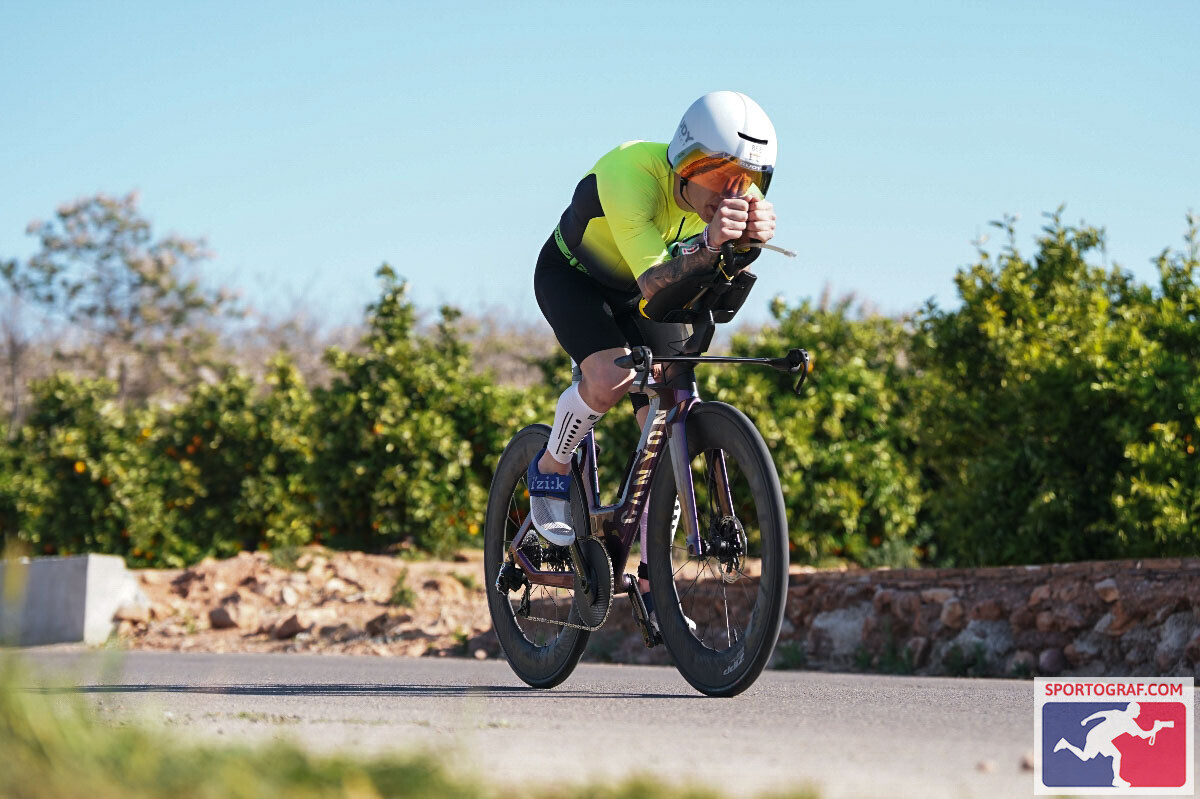
Triathlon bikes are built as outright speed machines, designed specifically for those head-to-head race battles against the clock. From the shape of the frame to the angles, everything is geared to squeeze out a few extra percentage points of speed and power for that gruelling solo effort of a triathlon bike leg. And as a result, they put you in a pretty aggressive, forward-leaning aerodynamic position.
Detailed Comparison: Road Bike vs. Triathlon Bike
| Feature | Road Bike | Triathlon Bike |
|---|---|---|
| Primary purpose | Versatile riding, training, group rides, endurance | Optimized for triathlon & time trial racing |
| Riding position | More upright, comfortable | Aggressive, aerodynamic “aero bars” position |
| Frame geometry | Road bike frame is balanced for handling & comfort | Steep seat angle. Places hips forward for open run-ready hips |
| Aerodynamics | Moderate. Rider position is less optimized | Highly aerodynamic triathlon bike frame, wheels, and integrated components |
| Speed on flat courses | Good, but less efficient at high sustained speeds | Excellent. Designed to slice through the wind |
| Comfort over long rides | High. Ideal for long training sessions | Lower. Optimized for race distance, not all-day comfort |
| Handling & Stability | Superior. Agile and easy to corner | More technical. Requires focus, especially in crosswinds |
| Climbing performance | Strong. Often lighter and more responsive | Less efficient on steep, technical climbs |
| Transition efficiency | Standard set up. Slower to mount/dismount | Designed for fast transitions (often with built-in storage) |
| Use outside racing | Ideal for daily training and social rides | Limited and less safe in groups or traffic |
| Beginner friendliness | Highly recommended for new cyclists | Steeper learning curve. Requires bike handling skill |
| Cost & Maintenance | Generally, more affordable. Simpler, standard components | Typically, more expensive. Specialized parts can be costlier |
Road Bike Overview: Strengths and Limitations
Think of a road bike as your reliable daily driver. It’s designed to do almost everything well.
What a Road Bike Is Designed For
A road bike is designed for the vast majority of actual real-life cycling. Think long weekend rides with mates, tackling mountains, tearing down the road with your mates in a fast group & chatting the whole time, commuting or just exploring new roads & trails, and generally just getting out there for fitness & adventure.
Advantages of a Road Bike
Here’s why many triathletes choose it:
- Comfort & Endurance. The slightly more upright riding position compared to a triathlon bike is a lifesaver. You can easily knock out 4,5 or 6 hours in the saddle and still feel pretty fresh afterwards.
- Pure versatility. This is what really sets it apart. You can pretty much use the one bike for anything you want (group rides, hill repeats training, and going through your first triathlon)
- Superior climbing & Handling
- Climbing is lighter & more responsive generally. When you stand up to push hard over a steep bit its just a natural, stable feel.
- Handling is just top-notch. It’s agile, corners on rails, descends with confidence, and brakes hard. You just feel more in control which is way safer & more fun, especially for beginner triathletes.
Disadvantages of a Road Bike for Triathlon
Despite the pros, there are a few things to keep in mind:
- Aerodynamics. Sitting more upright means you’re a bigger sail. You’re fighting more wind resistance. At 20+ mph, this is a huge energy drain. You can mitigate this significantly by adding clip-on aero bars, but it’s never as integrated as a true tri bike.
- Speed efficiency on flats. On a flat, straight, non-drafting triathlon course, you will be slower for the same amount of power output than someone on a tri bike. Period. The road bike isn’t optimized for that singular task.
- Transition limitations. The geometry isn’t designed for the bike-to-run switch. A steeper seat tube angle on a tri bike saves your running muscles. On a road bike, you might feel more crunched up when you start running.
Road Bike vs Tri Bike for Different Use Cases
Let’s get to what really matters: which bike you need, when you need it. We’ll break it down by your specific situation.
Road Bike vs Triathlon Bike for Beginners
In the case of a complete newcomer to the sport, the safe bet is a road bike. Here’s why:
- Road bikes are predictable, easy to handle in a pack, and safe to ride. You don’t need to worry about some quirk causing you to crash mid-race when your head is already spinning.
- Before you can even think about mastering a tri bike, you need to get the basics of bike handling down.
- You have no idea what you’ll really enjoy about triathlon at this point. You might find yourself loving cycling, but if you don’t have the chance to explore that you might miss out. A road bike lets you get a feel for that.
- You just want to do your first race, have fun, and get it done with minimal stress. A road bike will help you have a bit more fun and a lot less pain.
So, for your very first season, consider renting or borrowing a road bike. If you get hooked, then you can go tri-bike crazy when the time is right.
Training Only vs Racing Focus
For training only (or mostly), choose a road bike. It’s great for long weekend miles, group rides where you can chat, and building endurance without beating up your neck and back. A tri bike is not the right tool for this job.
For a racing focus, you should split the difference between triathlon bike and road bike. If you’re truly race-focused, the ideal setup is both.
You train on the road bike (saving the tri bike position for your upper body) and race on the tri bike. If you can only have one bike but race is #1 priority, a modern triathlon bike can work, but be prepared for lonely, careful training rides.
The Difference Between Road Bike and Triathlon Bike for Long Distance
The long-distance events, such as half Ironman and full Ironman races, are the strongest case for a time trial bike:
- The aerodynamic savings of a tri bike are about energy savings. Over 112 miles, saving 15-20 watts means you burn significantly less energy. That’s energy you get to keep for the marathon.
- Geometry that opens your hip angle is designed specifically for the bike-to-run transition. Storage for all your cycling nutrition/hydration is integrated. It’s a machine built for the specific problem of a long-distance triathlon.
- Counterintuitively, the aero position, when fitted perfectly, can be more sustainable over many hours than an upright road bike position that catches more wind and uses different muscles.
If your Ironman is in Lanzarote or Nice (brutally hilly), a lightweight road cycling bike might be a smarter, bit faster choice. Course profile still rules.
How to Choose Between a Road Bike and a Triathlon Bike
Think of this as a decision flowchart in your head. Ask yourself these questions in order.
1. Your Racing Goals & Priorities
Do I just want to be done and have a good time, or am I really after a top spot on the podium and a personal best/PQ?
- Finish & Fun: For just hanging out on a road bike, a 100% sure shot is the way to go.
- Chasing a fast time: That’s where a tri bike comes in, as it’s all about shaving those precious seconds, not winning a participation award.
2. Comfort vs. Performance Trade-Off
“Am I willing to be less comfortable and give up easy group rides for potential race-day speed?”
- If you value versatility and comfort more, get the road bike.
- If you are willing to sacrifice daily comfort for race-day aerodynamics, the tri bike makes sense.
3. Skill Level & Experience
“Can I handle a twitchy bike in crosswinds and corner confidently while down on the aero bars?”
- New to cycling? Road bike. It’s safer and easier to learn on.
- Experienced and confident? You have the skills to harness a tri bike’s speed.
4. Terrain & Course Profile
What do my A-race courses look like?
- Flat, straight, fast (like Kona or a local time trial): This is tri bike territory. It’s where it shines brightest.
- Hilly, technical, lots of turns (like lots of mountain races): A lightweight road bike might be the faster and more fun choice.
5. Budget & Upgrade Path
What’s my budget?
- Tight: A top road bike will be your best bike bet. You can always clip on aero bars to give it a bit of an edge for not much extra cost.
- A bit more money to play with: With a decent budget, you can get a really nice road bike and a used tri bike that will blow the doors off the whole lot for the price of just one super expensive tri bike.
But the most important question here will be: Where am I headed with this bike-buying thing? Start off on a road bike and see how long you stick at it. If it all starts to take over your life, get yourself a tri bike as a dedicated racing machine, that’s the dream for most age-groupers anyway.
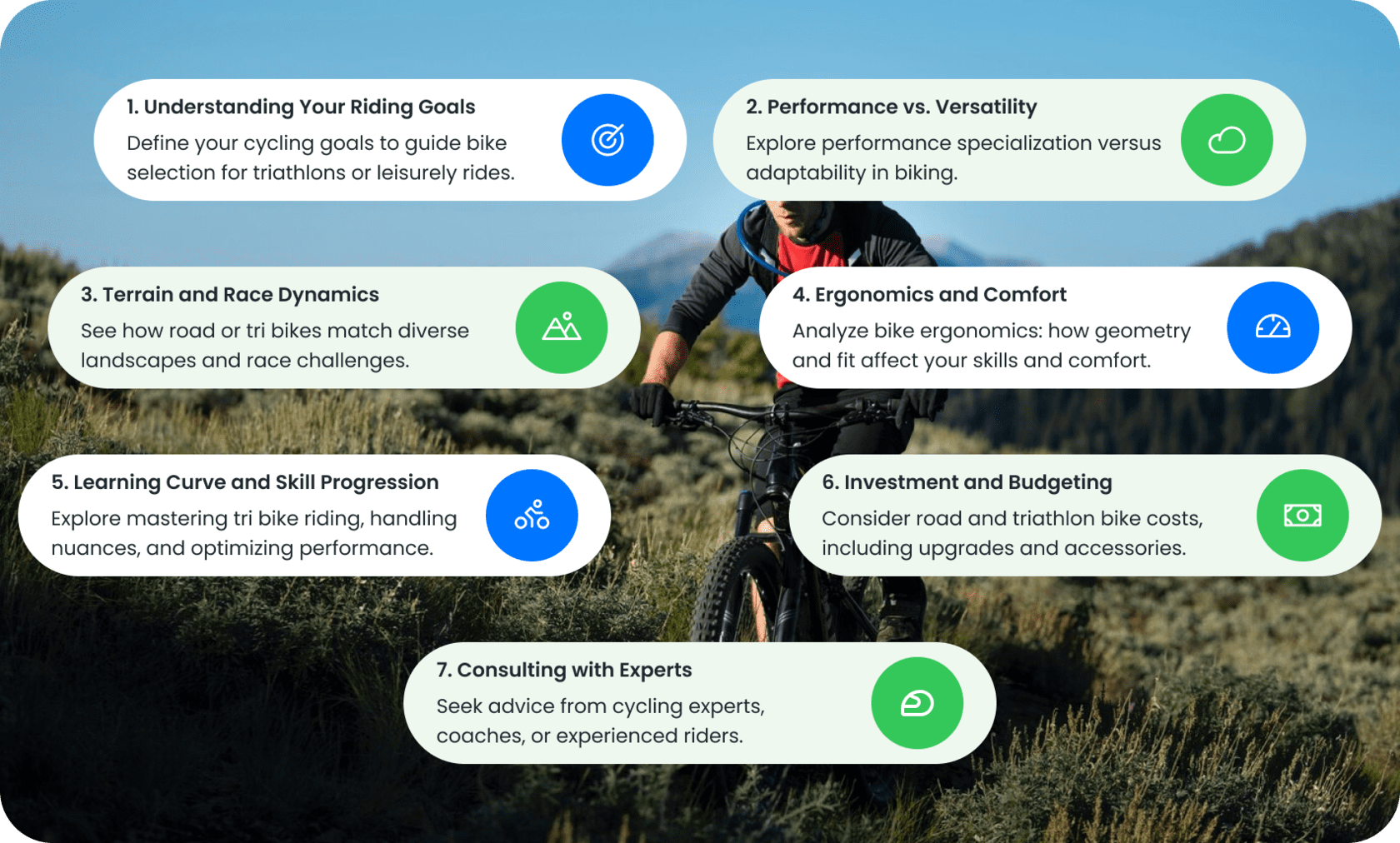
1. Understanding Your Riding Goals
Define the key objectives you have in mind for your cycling pursuits.
Whether it’s conquering triathlon races or indulging in scenic weekend rides, your goals will serve as the compass guiding your bike selection.
2. Performance vs. Versatility
Delve into the intricate balance between performance specialization and versatile adaptability.
Are you a skilled bike rider or just starting your bike ride journey?
Analyze how your choice between triathlon and road bikes influences your riding experience in different contexts.
3. Terrain and Race Dynamics
Explore the terrain you predominantly encounter and the specific demands of triathlon races you aim to participate in.
Uncover how the distinct attributes of road bikes or triathlon bikes align with the challenges posed by varied landscapes and race stages.
4. Ergonomics and Comfort
Dive into the realm of ergonomics, assessing how each bike’s geometry and fit contribute to your overall bike skills and comfort during rides.
Consider how aggressive road and triathlon bike geometry positions are and how endurance-friendly designs impact your cycling enjoyment.
5. Learning Curve and Skill Progression
Address the learning curve associated with each bike type.
Delve into how quickly you can become a skilled tri bike rider, master the handling nuances, and optimize your performance.
6. Investment and Budgeting
Discuss the financial aspect of your decision.
Examine the cost considerations of acquiring and maintaining a traditional road bike and triathlon bike type, including potential upgrades and accessories.
7. Consulting with Experts
Highlight the significance of seeking advice from cycling experts, coaches, or experienced riders.
Their insights can provide valuable guidance tailored to your individual goals and circumstances.
Cost Comparison Road Bike vs Triathlon Bike
Let’s talk about money because, let’s face it, it’s usually what comes down to the final decision
Initial Purchase Cost
Road bike
Buying a good road bike is a lot like getting a reliable car. It’s something you can use for years to come without too much fuss. You can find a solid, brand-new entry-level road bike from a major brand (with Shimano 105 sort of quality kit) that will cost somewhere between $1500 to $2500. This bike will be great for all your riding needs, and will likely last you for years to come. Plus, the second-hand market is awesome here, and you can pick up a great deal for under a grand.
Triathlon bike
When it comes to triathlon bikes, getting one is more like buying a sports car. It’s a bit of an indulgence. The entry point is a bit higher. A brand new entry-level tri bike from a reputable manufacturer will cost you around $2500 to $3500, and that’s often for last year’s model or with a lower spec kit.
If you want a nice tri bike with all the bells and whistles (like storage for your bits and good wheels) youre easily looking at $4000 or more. The second-hand market exists for tri bikes, but it’s definitely riskier because of all the specialist / fiddly parts involved
Maintenance and Upgrade Costs
This is where the reality of owning a tri bike really starts to set in.
Bike maintenance is important, and the check will look different depending on the bike type.
- Road bike: All in all its just standard stuff. You can take it to any local bike shop and get the work done. And parts like tires, chains, and cassettes are pretty common and won’t break the bank.
- Triathlon bike: That’s a whole different story. The integrated cockpit, internal cable routing, and those proprietary parts like unique brake calipers or seat posts make even the simplest of adjustments a major hassle and a big expense. You might have to special-order it from a shop that actually knows how to work on tri/TT bikes.
Upgrades:
- Road bike: Honestly, the first things to look at are new tires and getting a proper bike fit. Then maybe some new wheels. All totally standard stuff.
- Triathlon bike upgrades: The thing is, the bike is the upgrade, not so much the parts. Once you’ve bought the TT bike, you’re off: it’s already fitted out with aero bars, deeper wheels, and all that. But if you do need new parts, they’re usually proprietary and cost a fortune (think a replacement aero base bar or custom-fit things like disc brakesclips on bars, etc)
If you go down the tri bike route, chances are you’ll still want to keep a road bike for:
- Group rides where there’s less pressure to go fast.
- Training on bad weather days.
- Climbing hills or technical, mixed terrain.
- Just plain old road riding for fun, without the stress of racing.
So your total cost isn’t just tri bike vs road bike. It’s more like:
- Option A (road bike only): About two grand
- Option B (Tri bike and a cheap road bike later): Roughly three and a half grand plus another thousand for the road bike, so thats $4,500+

Conclusion Road Bike vs Triathlon Bike Final Thoughts
Here’s the honest lowdown in this short guide on the difference between tri bike and road bike:
If you’re getting into the triathlon scene, kick things off with a road bike. It’s just plain sensible, and actually a whole lot more fun to ride. It won’t hold you back from doing pretty much anything – training, racing, riding with mates, so just go for it.
A tri bike is actually a pretty specialized gadget. You buy one when you’re well & truly hooked on the sport & the only thing holding you back is that your road bike is pretty basic. Most triathletes choose it when they feel they are ready to optimize their performance and get those aerodynamic benefits.
The perfect bike is the one you’re actually going to ride loads, feel comfortable on & enjoy using.
Don’t get too caught up in it all in the early stages. Just get a decent road bike & put in the miles. Let your progress be the guide, and don’t let fear of missing out on gear dictate when you’re ready to look at upgrading.
FAQs: Triathlon Bike vs Road Bike
What’s the main difference between a tri bike and a road bike?
The rider position is the most obvious difference.
A tri bike puts you in an aggressive, forward-leaning aerodynamic tuck on elbow pads (TT position). A road bike has a more upright position that is more balanced for comfort and handling.
The tri bike is built mainly for saving energy and speed on straight, flatter courses.
Can you use a regular road bike in a triathlon?
Absolutely — especially for your first races. Many amateur triathletes use road bikes.
They are comfortable, easy to handle, and work well in crowded race conditions.
If you want a more aerodynamic position, you can add clip-on aerobars as a simple upgrade.
Is a triathlon bike worth it for beginners?
Almost never. Beginners benefit more from learning bike handling, building fitness, and getting comfortable with the sport.
A road bike is safer, more versatile, and more forgiving. A tri bike can come later when you’re focused on performance and time gains.
Can one bike be used for training and racing?
Yes. A road bike is perfect for both training and racing.
You can use it for daily rides, group sessions, and race day without needing any special setup.
Does a triathlon bike make you faster?
Yes — but only in the right conditions.
On flat, non-drafting courses, a tri bike can save energy and improve speed. On hilly or technical courses, the advantage may be smaller.
The bike doesn’t make you fitter — it just helps you turn your effort into speed more efficiently.